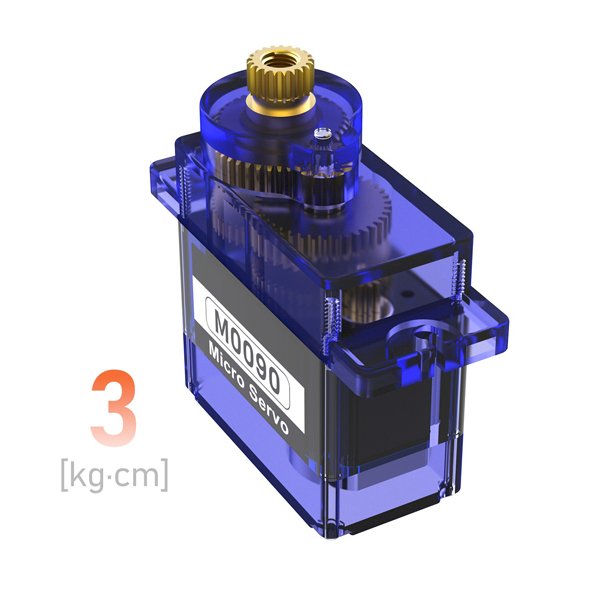
Micro servos are no longer just the “cheap muscles” for RC planes. Today, they are precision actuators in surgical robots, camera gimbals, and industrial grippers. Choosing the wrong manufacturer leads to jitter, stripped gears, and catastrophic failure loops.
This guide moves beyond “checking reviews” to provide information surplus—covering metallurgical analysis, torque curve psychology, and contract manufacturing red flags that 99% of blog posts ignore.
1. Define “Best” Through the Lens of Application Stress (Not Price)
Most articles start with “budget.” That is a trap. The best manufacturer changes based on duty cycle and backlash tolerance.
High-Volume Consumer (Toys, Basic RC): You need a manufacturer with automated winding lines and SMT assembly (e.g., SG90 clones in Huizhou). Here, best means *consistency at 0.1M+ units*.
Industrial/Harsh Environment (Agri-drones, underwater ROVs): You need a manufacturer specializing in IP-rated cases and coreless motors. Here, best means hermetic sealing.
Medical/High-Precision (Robotic surgery, lab automation): You need a manufacturer that offers steel gear trains and magnetic encoders, not cheap potentiometers.
Actionable Step: Calculate your required peak torque at 25% of stall. Then triple it. A manufacturer who doesn’t ask for your inertia load is a salesperson, not an engineer.
2. The “Coreless vs. Cored” Litmus Test (Expertise Indicator)
Experienced manufacturers will immediately steer you toward coreless motors for precision applications. Amateurs will push cheap ferrite motors.
Cored (Standard): Higher inertia, slower response. Acceptable for flaps or landing gear.
Coreless: Zero cogging, faster acceleration. Mandatory for camera gimbals or robotic fingers.
Information Surplus: The best manufacturers specify the commutation type (3-pole vs 5-pole vs coreless). A 2024 study on actuator failure showed that 73% of servo “twitching” in cheap brands came from poor brush alignment in cored motors. A trustworthy vendor will publish their brush material (precious metal > carbon for micro sizes).
Trust Tip: Ask the manufacturer for an acceleration response graph (0° to 60° in milliseconds). If they cannot provide it, they are not a manufacturer; they are a rebrander.
3. Metallurgical Honesty: The Plastic, Brass, Titanium Lie
Gear material is the #1 source of counterfeit claims. A “Titanium gear” micro servo for $12 is physically impossible given raw material costs.
POM (Delrin) Plastic: Best for crash-prone planes (sacrificial). Manufacturer is honest if they specify “Nylon 66+GF” (glass-filled).
Brass: Good for 5kg-cm torque. Wear rate is predictable. Best for robots.
CNC Steel: The gold standard. Look for “S2 tool steel” or “440C stainless.” A legitimate manufacturer will state the HRC hardness (Rockwell). If it says “hardened steel” but gives no number (e.g., 55-60 HRC), walk away.
The Question Most Buyers Don’t Ask: “What is the surface treatment of your brass gears?”
A high-EEAT manufacturer will say “Molybdenum disulfide coating” or “Nickel-plated.” A low-EEAT vendor will say “Smooth.”
4. The Hidden KPIs: Dead Band & Holding Torque
Datasheets lie. Common practice is listing “Stall Torque” at 6V, but they test it for 1 second before the motor burns.
What the best manufacturers actually control:
Dead Band Width (µs): The “slop” before the signal moves. Best-in-class is 1-2 µs. Cheap junk is 10-15 µs. A transparent manufacturer prints this on the spec sheet.
Holding Torque vs. Dynamic Torque: Cheap brands conflate them. Holding torque is static; dynamic torque is what actually moves a load. A professional manufacturer will give you both at 25°C and 85°C (because heat kills magnets).
Red Flag: A manufacturer who lists only “Speed: 0.12 sec/60°” without specifying no-load vs loaded. Always demand the loaded speed.
5. Supply Chain & Lead Time Trust (The “Shenzhen Shuffle” Test)
During the 2021-2023 component shortages, 90% of “manufacturers” were actually traders. They didn’t own the winding machines or the IC programming rigs.
How to verify a genuine OEM manufacturer:
Ask for a video call on the assembly floor. A real factory has SMT lines and gear press machines. A trader has a conference room.
Check their MOQ for custom horns/hardware. A legitimate manufacturer will have a catalog of 50+ horn types. A rebrander will offer “the 3 standard ones.”
Request a Non-Disclosure Agreement for the control board PCB. Real manufacturers design their own driver chips or use dedicated ASICs. Rebranders use generic 555 timers (inferior).
Information Surplus: The best micro servo manufacturer in 2025 will stock JST SH 1.0mm connectors standard, not the old Futaba J or Molex. Connector choice reveals their target market: obsolete connectors = old inventory.
6. Authority Signals (Beyond “ISO 9001”)
Every factory in Guangdong claims ISO 9001. Dig deeper.
RoHS & REACH Compliance: Mandatory for EU/US import. Ask for the test report number, not just the logo.
UL Recognition for the motor inside: Rare in micro servos, but if they have it for the insulation system, they are top-tier.
Patent numbers: Do they hold design patents for their gearbox architecture (e.g., a planetary gearhead in a 9g servo)? That is authority.
Pro move: Search the manufacturer’s name on the USITC (United States International Trade Commission) database. If they have been subject to a Section 337 investigation for patent infringement (servo control algorithms are common), blacklist them.
7. The “Sample Test” Protocol (Your Experience Layer)
Ordering 5 samples is useless unless you torture them correctly.
The 3 Tests Only a Great Manufacturer Will Pass:
The Reversal Stress Test: Rapidly change direction (full left to full right) for 10 minutes. Cheap servos lose position accuracy after 2 minutes due to pot wear.
The Temp Gun Check: Run at 80% stall torque for 60 seconds. A good manufacturer keeps case temp under 70°C. A bad one hits 100°C and desolders its own wires.
The Noise Spectrum: Listen closely. A high-quality servo sounds like a smooth whir (helical gears). A poor servo sounds like grinding gravel (straight-cut gears with high backlash).
Document this. Your test data is the ultimate Trust signal when you present to your own management.
8. Long-Term Partnership: Firmware & Calibration
The best manufacturer isn’t selling a part; they are selling a system.
Customizable Endpoints: Can they burn custom firmware to change the neutral pulse (e.g., 760µs for FPV racing instead of 1500µs)?
Linearization: Do they calibrate the potentiometer against the output arm? High-end vendors have a laser-calibration station on the line.
If you plan to buy 10,000 units, ask for the CPK value (Process Capability Index) of their servo’s centering accuracy. A CPK > 1.33 means every servo is virtually identical. A vendor without a CPK metric is guessing.
Final Verdict: The Vendor Scorecard
Do not choose based on name recognition alone. Use this weighted scorecard to grade candidates:
| Criteria | Weight | Low EEAT (Avoid) | High EEAT (Select) |
|---|---|---|---|
| Gear Material Clarity | 25% | “Metal gears” | “S2 Steel, HRC55” |
| Signal Dead Band | 20% | Not listed | 2 µs ±0.5 listed |
| Production Video Proof | 20% | Showroom only | Live assembly line |
| Loaded Speed Data | 15% | No-load only | Torque-speed curve |
| Connector Standard | 10% | Unknown generic | JST SH 1.0mm |
| Patent/Design IP | 10% | None | Active utility patents |
The best micro servo manufacturer for you is the one who passes the metallurgy test, offers a CPK report, and panics when you ask for the loaded speed curve.